The Melipona bee is smaller than a grain of rice, lives in a hollow log, and cannot sting you. The Maya called her Xunan Kab — royal lady — and treated her honey as medicine, currency and offering. When the Spanish arrived, the honey went into the tribute lists. When European honeybees took over the Yucatán, Melipona keeping nearly vanished.
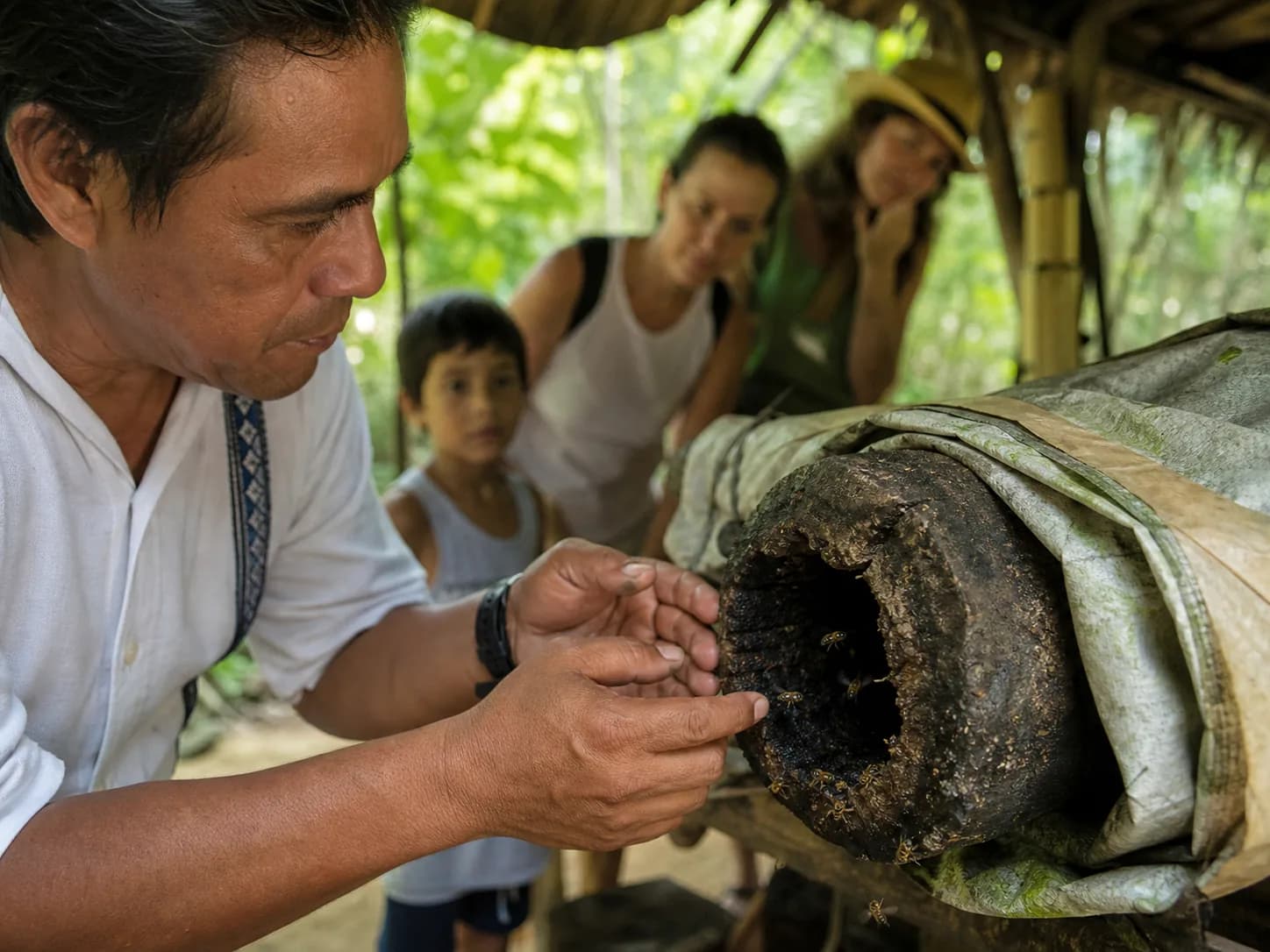
At the sanctuary you meet the survivors. The hives are jobones, hollow logs stacked in the shade the same way they were a thousand years ago, and the keeper opens one so you can watch the colony work. The bees land on your hands. Nothing happens. That is the whole point, and it is the moment kids stop being nervous around insects for the rest of the trip.
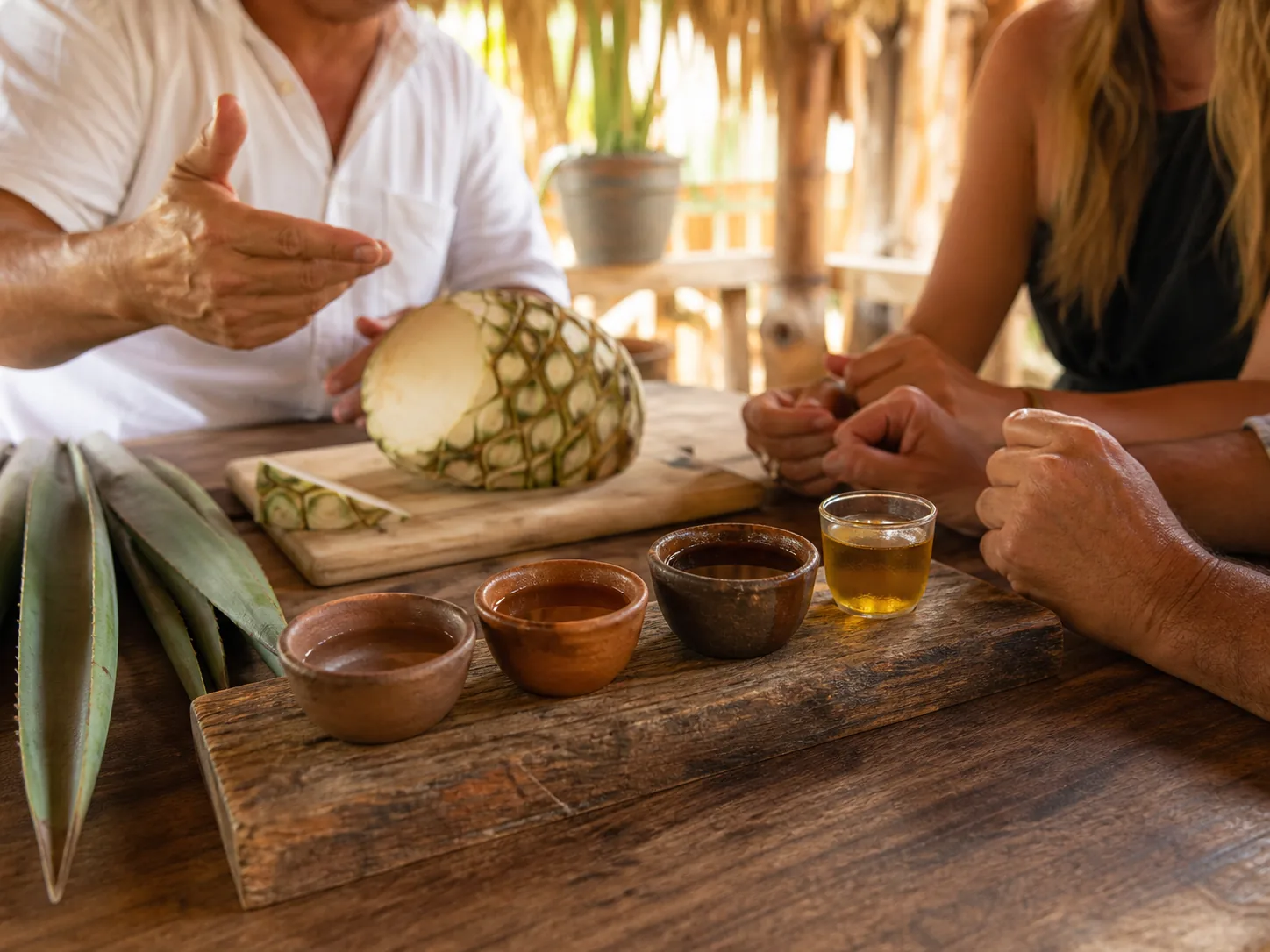
Then you taste. Melipona honey is thinner than what you know, almost citrusy, slightly fermented, and it has been used across the peninsula for eye infections, coughs and wounds long before anyone wrote a study about it. You will also see how it ends up in Xtabentún, and hear a short blessing in Maya if the keeper is in the mood.
It takes ninety minutes, it is mostly in the shade, and it is the tour guests bring up again at dinner. Cozumel has reefs and ruins. It also has this, and it is quietly one of the best things on the island.